
Wardrobe Building with Zoltán Ács and János Pereczes
I'm delighted to welcome two more good friends to the Wardrobe Building series. The photos bring to life the outfits we imagined together with Zoltán and János, and in the interview they talk about the role of dressing in business life and what they've personally learned along the way.
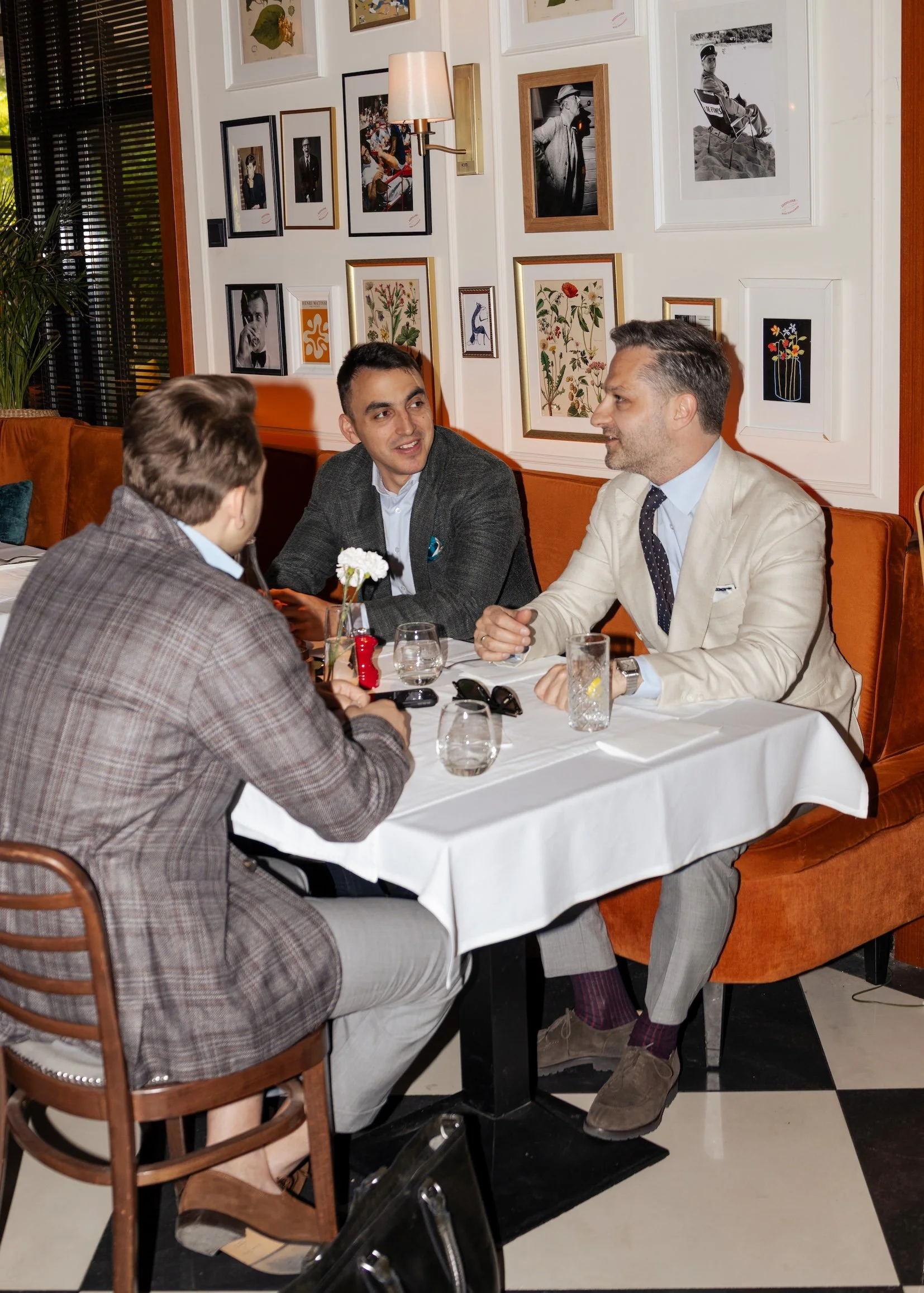

Milan: Could you both briefly introduce yourselves?
Zoltán: Over the past ten to twelve years, I've worked in corporate innovation, venture capital, and the fintech industry. Today, I focus on financing small and medium-sized businesses, support the European subsidiary of a Dubai-based fintech company, and serve as President of the Hungarian Fintech Association, where I'm dedicated to building and strengthening the fintech community.
I only believe in organizations and partnerships built on a foundation of trust. But trust isn't created through presentations or compensation policies. It's built through consistency, genuine attention, and meaningful human relationships. Empathy is a leadership tool, but it's also much more than that. It's simply how I prefer to operate, both professionally and personally.
János: After a decade in banking, where I built my career in digital transformation and leadership, I co-founded my own ventures with my partners. At 1337 Partners, we help large enterprises transform their business models and operations by integrating AI. At AI Budapest, we're building an ecosystem that brings together some of Hungary's most talented AI professionals and innovators.
I believe the future is shaped by both technology and humanity. Lasting change comes from conscious, responsible leadership and from recognizing that people have the power to shape the world around them. Alongside my businesses, I also invest part of my time and capital into building First Principle Innovation, where we invest in and support Hungarian startup founders both in Hungary and abroad.
Milan: What was your first defining experience with classic style and wearing a suit?
Zoltán: From my university days I was really into old films, Italian neorealism, the French New Wave. Belmondo in Breathless, the Truffaut heroes, they were all incredibly cool. Everyone dressed beautifully back then; we're talking about the sixties.
Beautifully shot black-and-white films, and the characters were so stylish. But my real icon, the absolute top, was Marcello Mastroianni, especially in 8½ and La Dolce Vita.
That ease, the way he wore his suits, it really got to me. He looked immaculate.
Steve McQueen had an interesting style too, a bit more relaxed and sporty, but Mastroianni was the one. I remember thinking as a student: I want to be that cool.
János: My first defining moment came in secondary school. Mad Men and Gossip Girl had a huge impact on me. Don Draper embodied what it meant to look stylish. He suggested that this is how you should carry yourself, how you treat people.
The first elegant accessory that spoke to me was a pair of suspenders. I got them before a school dance; it was the first piece I consciously chose to stand out.
And then there was Chuck Bass from Gossip Girl, always impeccably dressed and full of character.
That said, I'm cyclical about dressing. I'm perfectly happy in a white t-shirt and jeans too. What matters is dressing for the occasion. When you feel confident, that always comes through.
Milan: How did those early impressions show up at the start of your careers?
János: Something just came to mind. When I moved to the capital for university, I told my mum I was calculating whether I could afford to buy a suit every month from my first paycheck.
Watching Mad Men as a kid, seeing Don Draper in a suit every day, that shaped my perception that successful people wear suits. After my graduation exams I was already browsing suits, figuring out where and what to buy.
I thought that was what mattered. And in a way it is: it's a signal you send about yourself.
Zoltán: I've always loved the tailored jacket as a garment. A blazer and a shirt, that's just who I am, it always has been.
I'm not someone who feels most like himself in jeans and a t-shirt. I'm genuinely comfortable in a tie, too. I think there's something interesting about what you choose to wear and what that says about you, while at the same time it's often part of a formal, protocol-driven world.
When you hand someone a business card, you also notice what that card looks like. First impressions always matter.
And stepping back even further: if you want to do business, you need to build trust. Without that, nothing happens.
The way you dress can be a quietly effective, almost radar-invisible tool in business.
What I don't respond well to is when someone communicates too loudly with their clothes. It creates a negative impression.
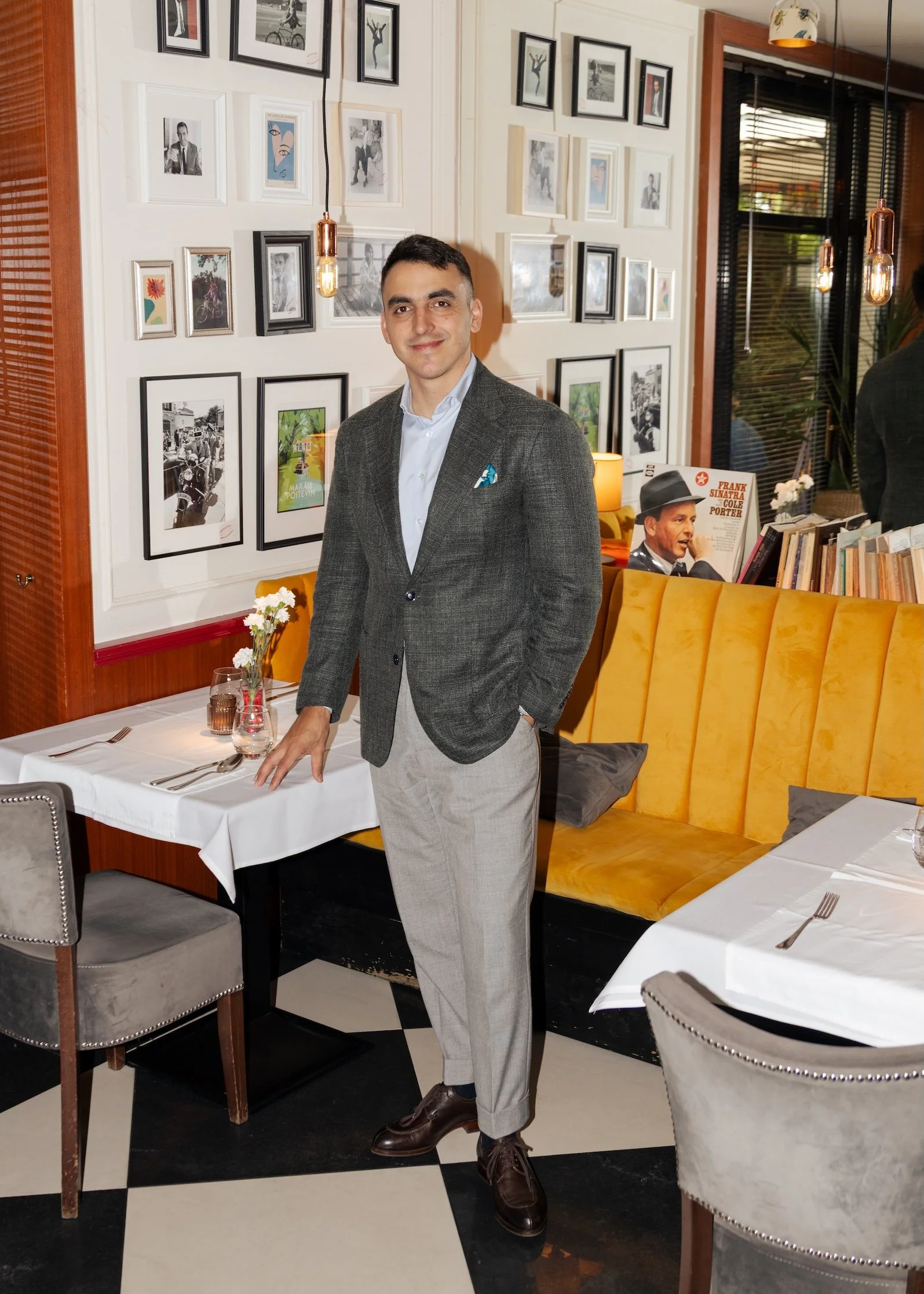
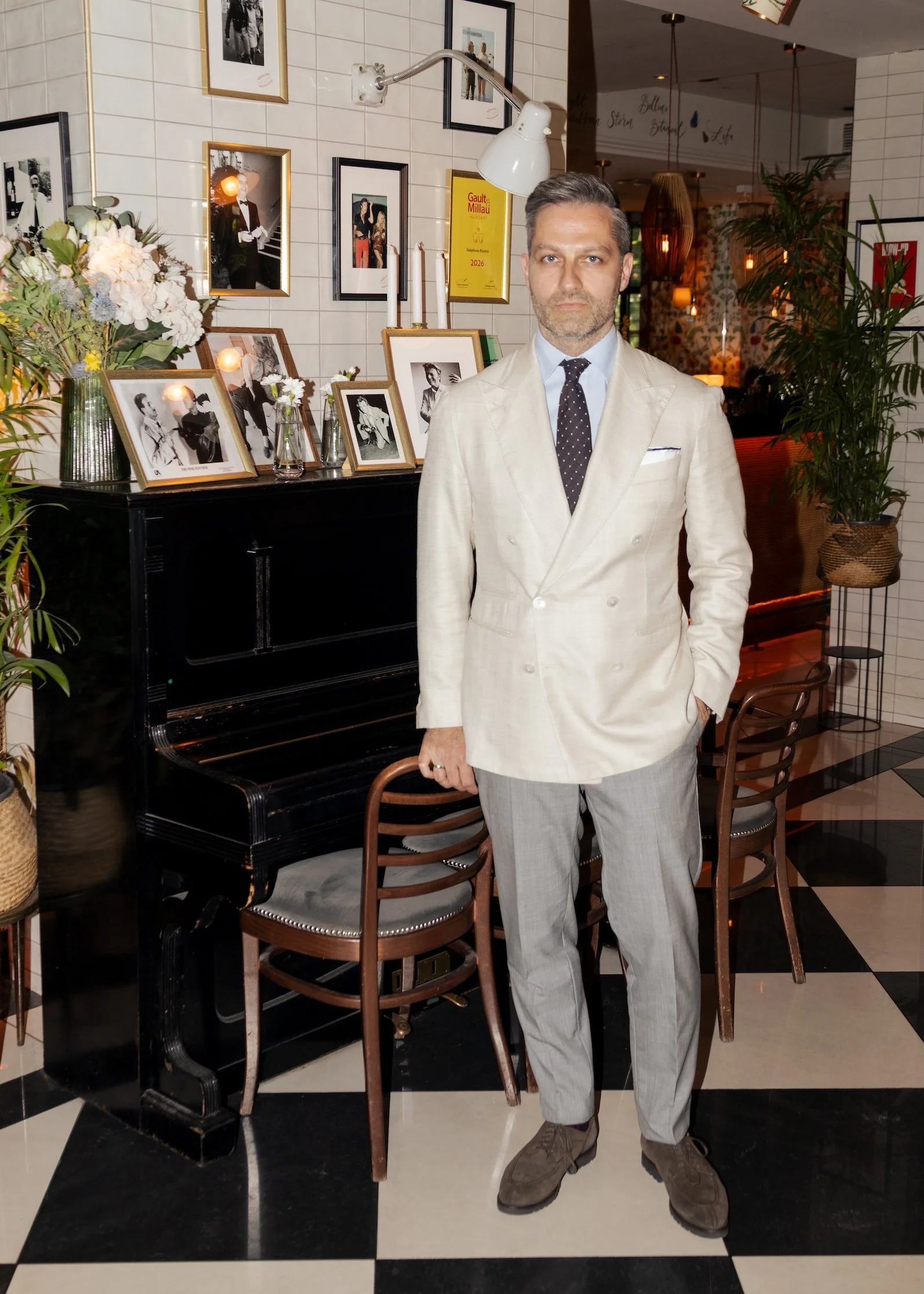
Milan: So it's about the overall picture? Do status symbols matter, or is it more about being put-together and intentional?
Zoltán: It's a mistake to try to display your status. Don't show that; show something of your personality, what you think of yourself and what world you move in.
János: Exactly.
Zoltán: Your clothes signal the context you operate in. You can say a lot about yourself, first impressions, second impressions, third ones too. You can even communicate values through how you dress. It's a fascinating game.
János: The interesting thing is that even if someone doesn't do this intentionally, it still happens.
When I think back to someone, their appearance is often part of the image that stays with me. Personality tends to show in how people dress.
I think of myself as someone who cares about quality but is also playful and likes to experiment, so I don't obsess over perfection. Sometimes I roll up my sleeves, sometimes I dress more casually, and I'm fine if things aren't exactly perfect.
Then again, we have mutual friends for whom precision is everything: every contract, every meeting, every garment in its place.
There's a basic protocol worth following. Stepping outside that frame can easily read as not respecting the situation or the other person.
Zoltán: Dressing for the occasion is important. If there's a dress code, you should always respect it.
János: How someone shows up also reveals a lot. You can often read personality from clothing.
Zoltán: And even something like Steve Jobs dressing so simply was actually very deliberate.
Milan: I think a delirate choice of him.
Zoltán: Maybe, but it still says something: he had a look, he stuck to it consistently, and it communicated something important about his personality.
Milan: Honestly, it feels a little pretentious to me. But it's clearly very effective. Wearing the same thing every day removes a huge number of decisions.
Zoltán: When you're a billionaire, you can afford that.
János: Ultimately, what you're comfortable with matters too.
Zoltán: It's still a designed choice.
Milan: And there's a status in being above the protocol.
Zoltán: Exactly.
János: Absolutely.
Milan: There are those who take advantage of this. For example, it does matter in which currency you’re a billionaire and, relative to that, to what extent you allow yourself to disregard protocol—and toward whom you do so.
János: Steve Jobs was communicating precisely that: he didn't care what the world expected of him. Some people probably experienced it as disrespect, but it was authentic to him.
Zoltán: Another example: there are memes about which watch brokers at different career levels on Wall Street wear. Once you own the firm, you don't need to stress about it anymore; you can wear a Swatch.
Status shows up in these choices, but status alone isn't a good message. Being put-together and dressed for the occasion is always the better signal.
János: And quality. It's also worth separating out why you're wearing something, whether you're representing yourself or playing a role. And honestly, you can often tell immediately. Wall Street, London, the concept gets a bit overdone there. Everyone in suits, often not even nice suits. On many of them you can see they're playing a part, not being themselves. You can read the uniform by how someone wears it. Out of ten suited people you can pick out who's performing and who's genuine.
Zoltán: Self-knowledge is crucial, and dressing reveals it too: knowing what suits you, what's flattering, what isn't. Business dress codes set certain boundaries in terms of formality, and it's interesting to see how different people relate to those limits.
What I find most interesting is communicating through subtle signals. Not everyone picks up on it, but those who speak the language do. A lot is said, for instance, in how someone actually wears their suit.
Other status markers are fairly obvious: the watch, the car, the apartment. But those belong to private life.
In public, clothing is the only complex system through which you can send a message without saying a word, and only those who speak the same language truly receive it.
János: Some people have a looser relationship with the rules and play more boldly with form. I'm like that: I wear what I feel good in.
At the same time, I know that from the outside it's easy to look like you're trying too hard if you wear something unusual. Sometimes I do it deliberately, because I want to stand out slightly. It's a social game; the people who are in it understand it.
Milan: How much has this "game" changed over your careers in Hungary? Does fitting in still matter? Has the standard risen, or slipped?
Zoltán: I think it's become more important, and there has been progress; more people pay attention to detail, at a social level too. At the same time, the environment around formal dressing has loosened. Formality is less defining than it was. Twenty years ago, suits were certainly required in more places.
János: Even ten years ago it was far more common than today.
Zoltán: Now a lot of people only realise it matters when they find themselves in a situation where it does.
János: The role of the suit has genuinely declined over the past ten to fifteen years. COVID accelerated that, especially in banking. It's completely normal now for a bank executive to show up in sneakers, jeans, and a polo shirt. Hybrid working added to it: dressing has become more casual both at home and in the office. The suit has survived at the protocol level, but as a daily work tool it's much rarer.
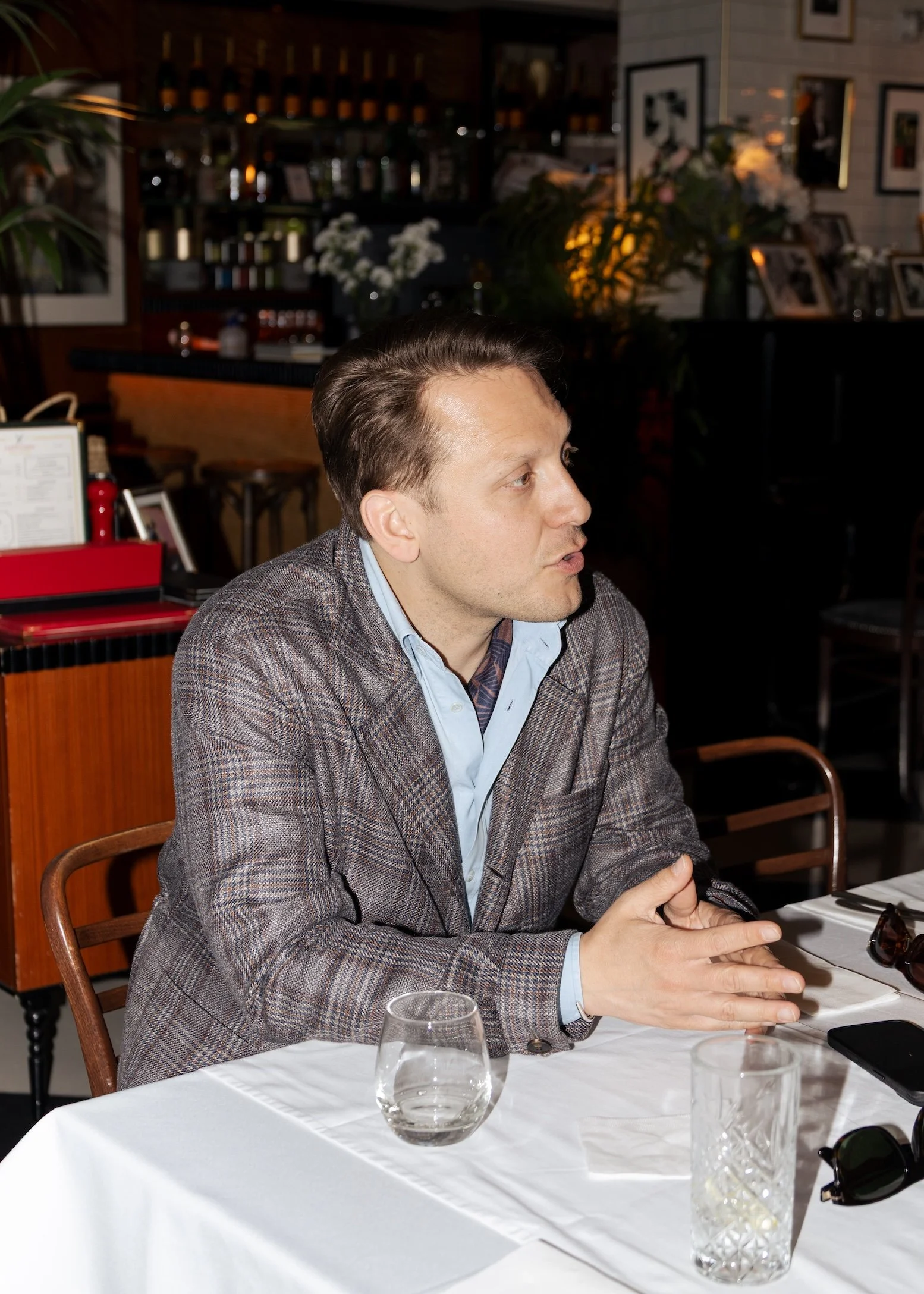
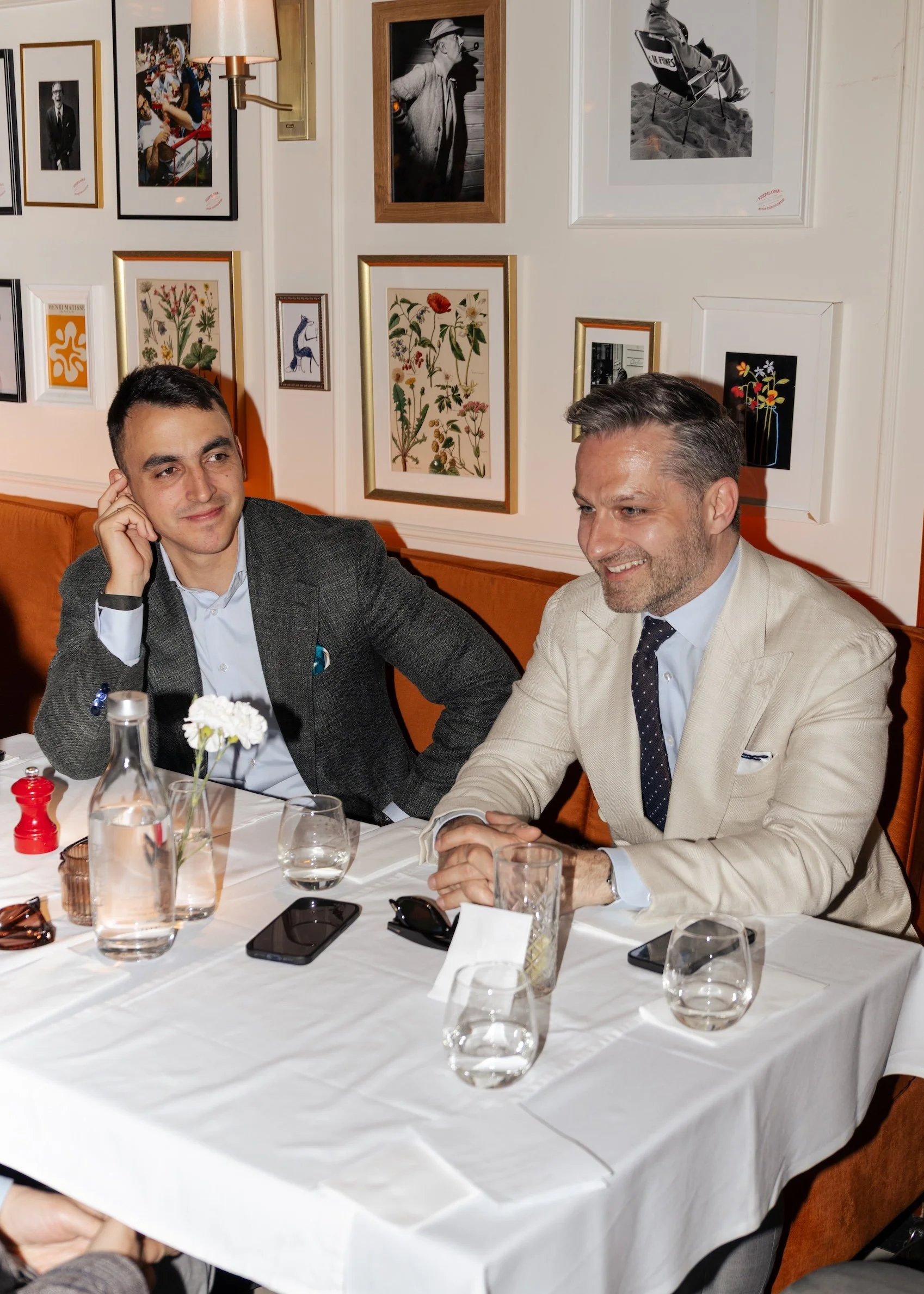
Milan: Where does playfulness fit in? What do you think about suits with sneakers? Are there rules worth keeping, red lines?
János: I don't have hard red lines. I'm more relaxed day-to-day: if it's a quality piece and you feel good in it, it works.
Zoltán: I don't wear sneakers with a suit myself, but if someone pulls it off well, that's fine. Anyone who does it is consciously playing with formality. I think that's entirely valid, especially in certain sectors.
János: In Rome you see more white trainers with suits than classic leather shoes on the Via Condotti. People zip past on scooters in trainers more often than oxford brogues.
Milan: And a backpack with a suit?
Zoltán: That one really doesn't work for me.
János: No red lines for me. Everything is possible.
Zoltán: I'm just not a backpack person. Context matters though. On a scooter it makes sense; it becomes functional rather than a style statement.
Milan: If someone is just entering this world, early in their career, how do you help teach taste and standards, especially if they didn't grow up in this environment?
Zoltán: I once kindly pointed out to a junior colleague that he shouldn't button the bottom button of his jacket. If someone is interested in the topic, you can absolutely guide them. I think it's important for men to have someone who helps with this, a mentor. It's almost a fatherly thing: the older generation quietly passing on to the younger how to dress properly in a business context. And from what I see, in Hungarian business life, a polished appearance is becoming increasingly important.
János: The question of how you learn it is interesting. You really have to live through it. The fast fashion wave is enormous. I went through my own phase of overconsumption. Building consciously, a few good pieces a year, a wardrobe that lasts ten to fifteen years, is genuinely worth it over time.
Milan: Have you developed any kind of wardrobe update strategy over the years?
Zoltán: Your life situation shapes your dressing a lot: work, weekends, kids. My son is four, and he already asks: "Dad, are you in your smart clothes?"
I told him early on that if I'm dressed up, I can't pick him up after he's been jumping in muddy puddles. So now he asks first, and if the answer is no, he asks me to carry him. And of course he always steps on my favourite leather shoes, but you get used to that quickly. Part of being a dad. :)
These days I buy less, but much more deliberately. I don't have patience for browsing shops anymore; I value being properly served and advised. Fewer pieces, better quality. And when you have the self-knowledge, the decisions come faster.
János: Time really is the most valuable thing. Being able to optimize the time you spend on dressing makes everything easier; it's a strong argument for having someone help you with it.
Made-to-measure has become much more valuable to me personally. The individual attention, being able to get on with your own things in the meantime, is worth twice as much. I used to order a lot online. Long-term, my conclusion is that it's not worth it: you don't get exactly what you expected, and it costs a lot of time.
Bespoke clothing is a luxury you need to grow into. It's not necessarily where you should start.
Milan: It really is rare to dress this way from the beginning. I went through the overconsumption and online shopping phase myself, ten years ago, before I started my own brand.
János: I think some people are conscious about it from the start. I just don't have that much time for it. Who's your youngest client? What do they do?
Milan: A 23 or 24-year-old, works in a family business. His brother gave him his first suit as a Christmas gift. He's very receptive, and I encourage him to buy from other places too, not just from me. I'm happy to give advice even when he's buying elsewhere. The goal is a good result and ease, alongside the time factor.
Zoltán: Made-to-measure does require more energy upfront: appointments, consultations, decisions about fabrics and details. But the result is worth it. You end up with pieces you can wear for many years, that combine well, that reflect your personal style, and that reduce the chance of getting things wrong.
János: You invest in something that no one necessarily even knows about. You simply look good. No big logos, no obvious markers, just the feeling that everything is in the right place. You feel good, and the people around you confirm it.
But you have to arrive at that mentally. Someone who primarily wants the brand to be visible on them probably won't immediately appreciate this kind of quality.
Zoltán: We keep coming back to the same principle: the most important thing is to look put-together, without any fuss.
For many people the pull of brands is very strong, and luxury outlet stores are deceptive, offering a kind of status, often without real quality, at inflated prices.
Buying only the iconic pieces of big labels signals a lack of confidence.
János: Buying counterfeit clothing also says something about you, that you're not quite genuine.
Fake logo belts with big buckles, for instance. I genuinely don't see the point.
Zoltán: The French have a great phrase for those kinds of originals too; they call them "made for export."
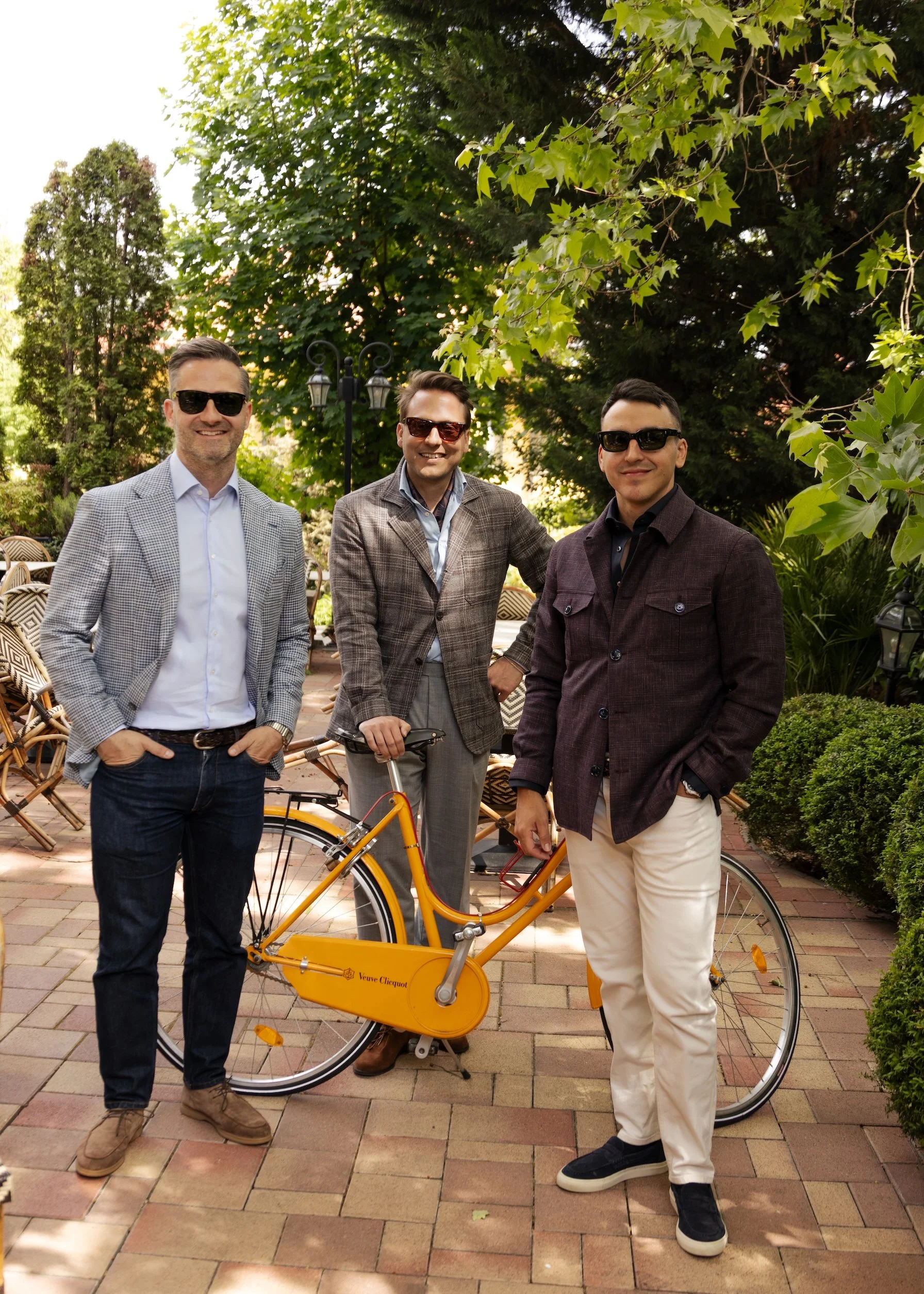
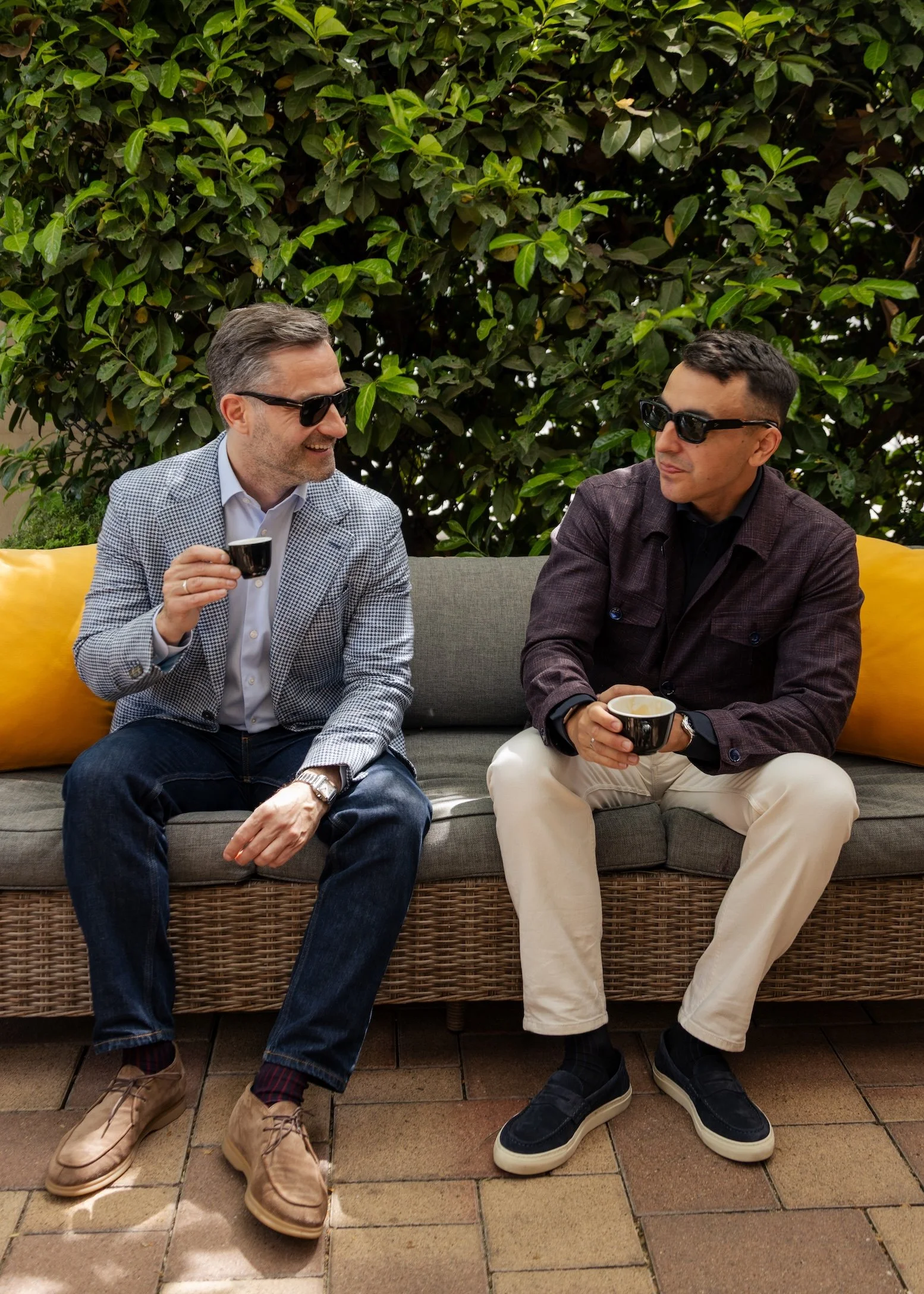
Milan: János, you move a lot in the tech world. How do you see that environment?
János: The general perception is that appearance doesn't matter there, that the stretched college t-shirt is the standard. I don't think that's right, and you shouldn't write it off that way. There are still protocol situations where showing up in a t-shirt doesn't reflect well.
There are real individuals in that world too; you can see great examples internationally of both smart casual and relaxed formal done well.
Milan: Elegance and formality run on separate tracks. Everyone can set their own dial on both, deciding what matters and what's worth expressing.
Milan: Tell me a bit about your business club.
Zoltán: It's called First Principle. For now it's a boys' club, not by design.
János: For now.
Zoltán: The members are mostly in their thirties and forties, mainly from finance, with a few exceptions. We came together because we shared similar views on business culture, ethics, and life in general. We sit a little outside the usual patterns of the financial world; we believe more in respect and collaboration-based business development.
We're over twenty members now. Deals and investments naturally come out of it too.
János: It's a good group, people you genuinely enjoy spending time with, both for business and for personal connection.
Milan: What about hobbies?
Zoltán: Alongside sport, visual art and literature are my absolute favourites. Obviously with two young children I have considerably less time for them now.
Milan: Those are passions that will be wonderful to pass on to them.
Zoltán: I recently took my son Kornél to a photography exhibition; he handled it pretty well. It was an André Kertész, Robert Capa, and Moholy-Nagy show in Eger.
Milan: If you're exposed to things like that at four, they become part of who you are.
Zoltán: I read to him from a beautifully illustrated book about the lives of the most important artists. Recently at a birthday party there was a Van Gogh reproduced in Lego, and he recognised it immediately. He can identify Picasso and Botticelli too.
Visual culture is very important to me, and it feeds into how I dress as well. Everything you take in comes back out. It helps with self-expression; it's inspiring.
Regular sport is essential for me too, though I have no interest in watching it. Cars and watches are close to my heart; it shifts back and forth between being drawn to the technology behind them or the aesthetic side.
János: I'm not really into objects. I occasionally talk myself into a purchase, and even then I like having help with the decision. What matters to me far more is function; I don't tend to over-romanticise objects in my life.
Photo: FP Abel
Location: Szépilona Bisztró
